It’s impossible to imagine a world without sound.
It’s probably the first thing you experience when you wake up in the morning—when you hear birds chirping or your alarm clock bleeping away.

Sound fills our days with excitement and meaning, when people talk to us, when we listen to music, or when we hear interesting programs on the radio and TV.

Add title
It’s impossible to imagine a world without sound.
It’s probably the first thing you experience when you wake up in the morning—when you hear birds chirping or your alarm clock bleeping away.

Sound fills our days with excitement and meaning, when people talk to us, when we listen to music, or when we hear interesting programs on the radio and TV.

Sound may be the last thing you hear at night as well when you listen to your heartbeat and drift gradually into the soundless world of sleep. Sound is fascinating—let’s take a closer look at how it works!

Sound is the energy things produce when they vibrate (move back and forth quickly). If you bang a drum, you make the tight skin vibrate at very high speed (it’s so fast that you can’t usually see it), forcing the air all around it to vibrate as well.

As the air moves, it carries energy out from the drum in all directions. Eventually, even the air inside your ears starts vibrating—and that’s when you begin to perceive the vibrating drum as a sound. In short, there are two different aspects to sound: there’s a physical process that produces sound energy to start with and sends it shooting through the air, and there’s a separate psychological process that happens inside our ears and brains, which convert the incoming sound energy into sensations we interpret as noises, speech, and music.
What is a sound wave ?
Sound is a part of our sensory experience. We perceive sound through our ears. Sound is a form of energy. It is a vibration which propagates through a medium.Sound travels in the form of a wave. A sound is produced due to the to and fro motion of the particles of the medium when the sound wave passes through it. A pattern of disturbance which is caused by the energy that travels away from the source of sound is called a sound wave.

A sound wave is a mechanical wave . A mechanical wave is caused by a vibration of matter and it propagates through a material medium like solid,liquid or gas.It involves the interaction between particles.Since a sound wave is a disturbance which travels through a material medium and also involves particle-particle interaction, it is said to be a mechanical wave.Mechanical waves do not travel through vacuum. Hence , sound waves cannot travel in vacuum.

Longitudinal waves are the one in which displacement of the individual particles of a medium is parallel to direction of propagation of wave.In a fluid medium like gas or liquid, the particles of the medium through which sound travels vibrates parallel to the direction that the sound wave moves. Hence, sound waves are longitudinal waves.When particles of the medium vibrate,they move back and forth. This continous back and forth movement of such particles creates high pressure and low pressure regions. These are termed as compressions and rarefactions respectively. Compressions and rarefactions are created due to these longitudinal vibrations.
A wave in which the propagated disturbance is a variation of pressure in a medium is called a pressure wave.Sound wave is also called a pressure wave because it consists of a repeating pattern of high-pressure and low-pressure regions moving through a material medium.
Parts of a sound wave
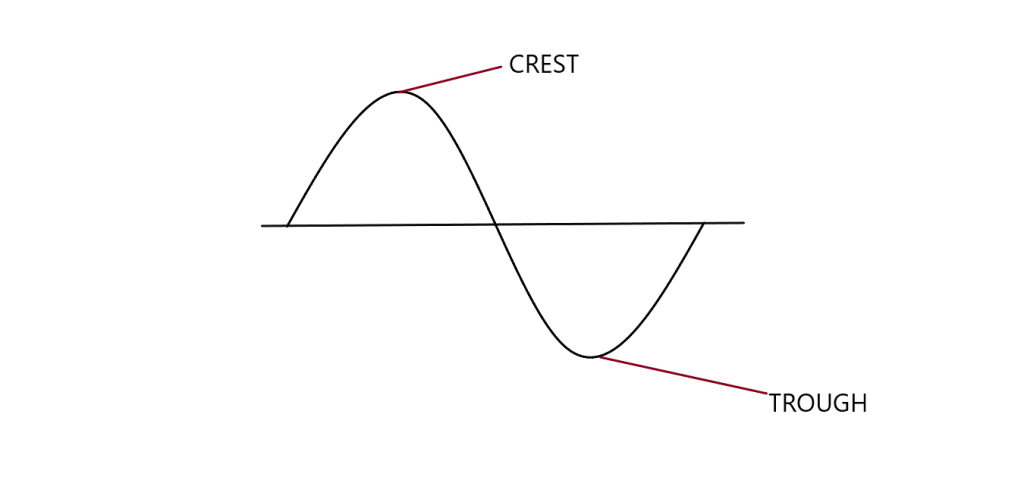
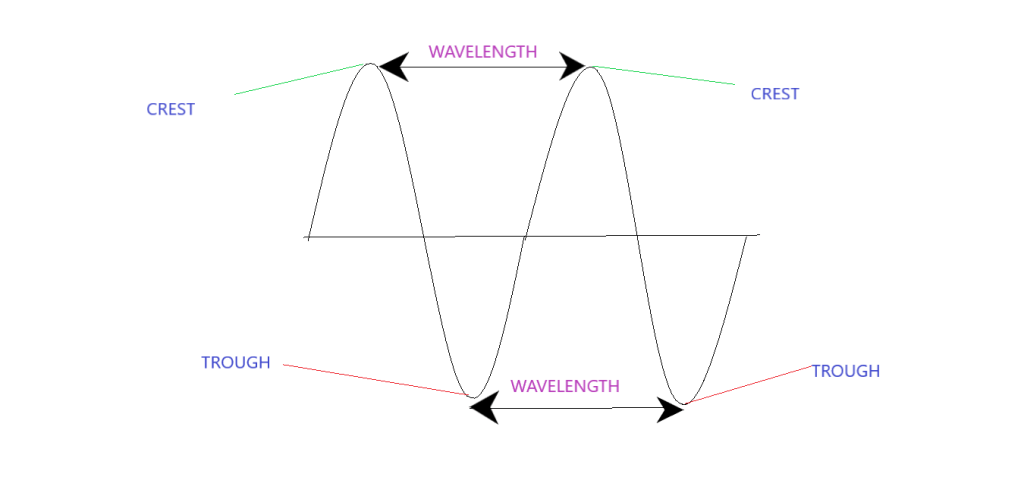
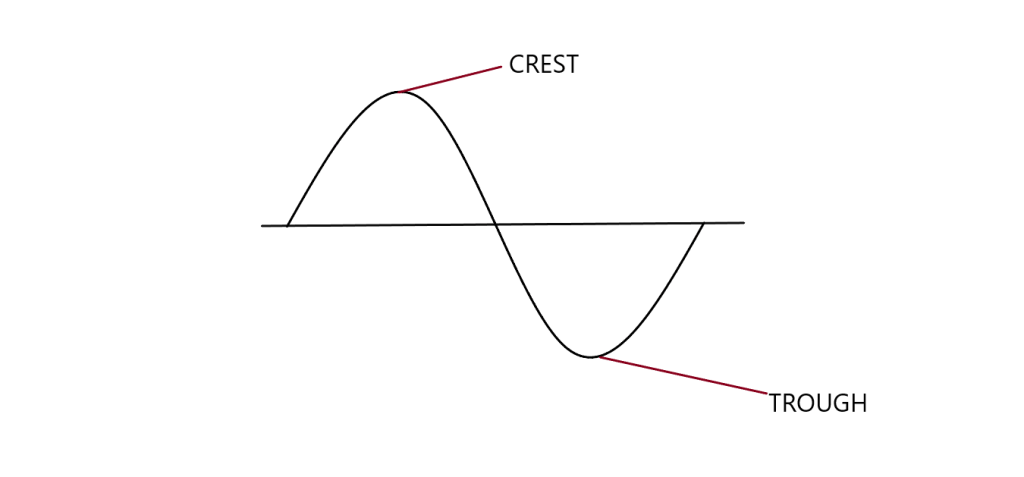
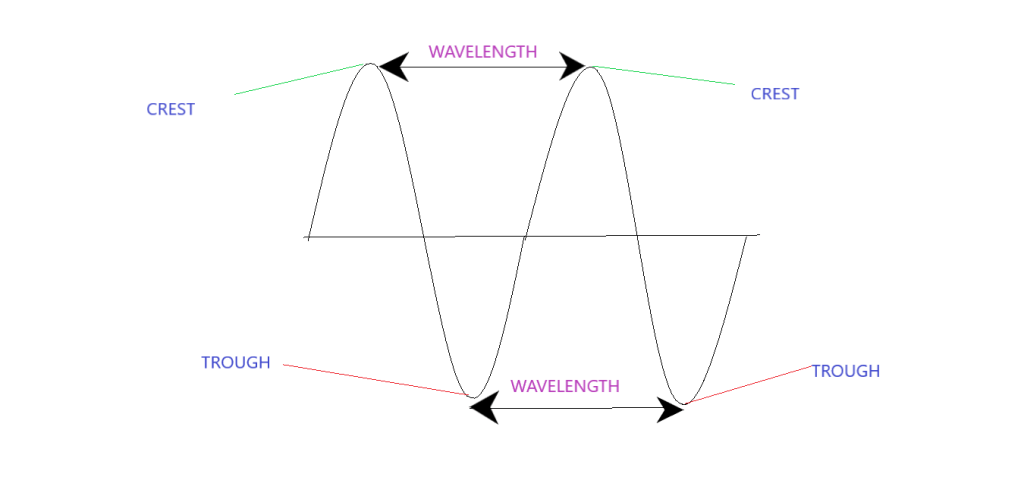
Each wave has a highest point to which the medium rises to and it is termed as crest.It is the point on the wave where the displacement of the medium is maximum.The lowest point to which the medium sinks to is called a trough.It is the point on the wave where the displacement of the medium is the minimum.
Characteristics of a sound wave
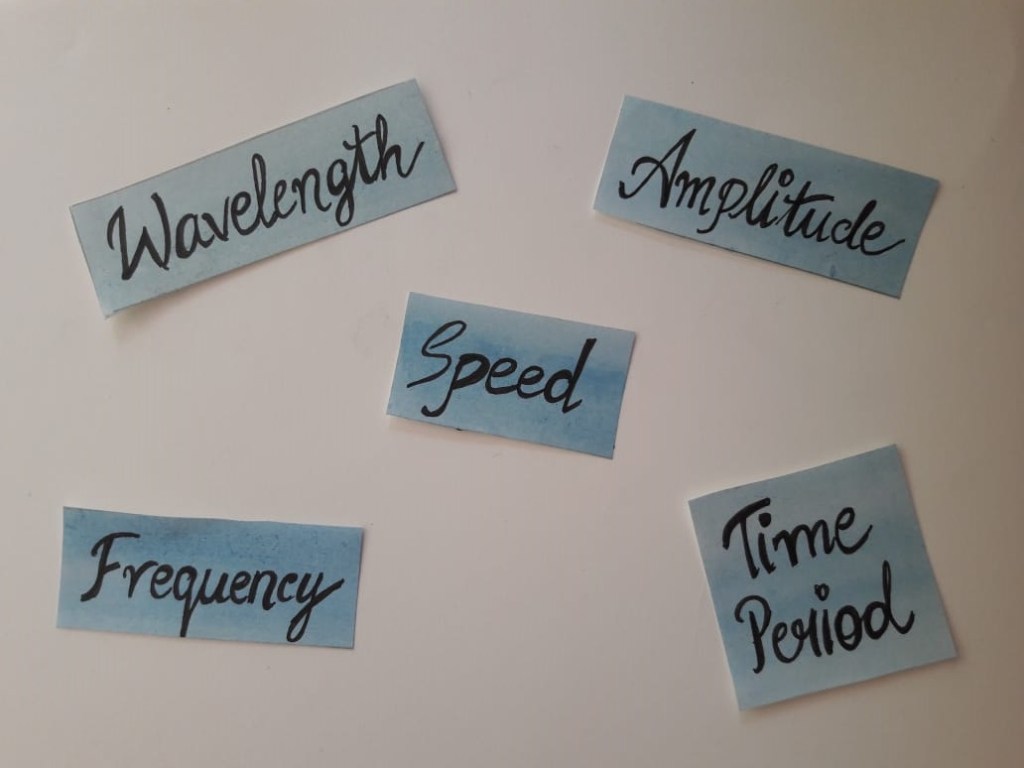
We hear a variety of sounds in our daily life.They can be soft,loud,pleasant and even annoying.Sound produced by a flute is different from the sound of a guitar. We understand from this that the sound produced by different sources have different features or characteristics.There are five main characteristics of a sound wave. They are
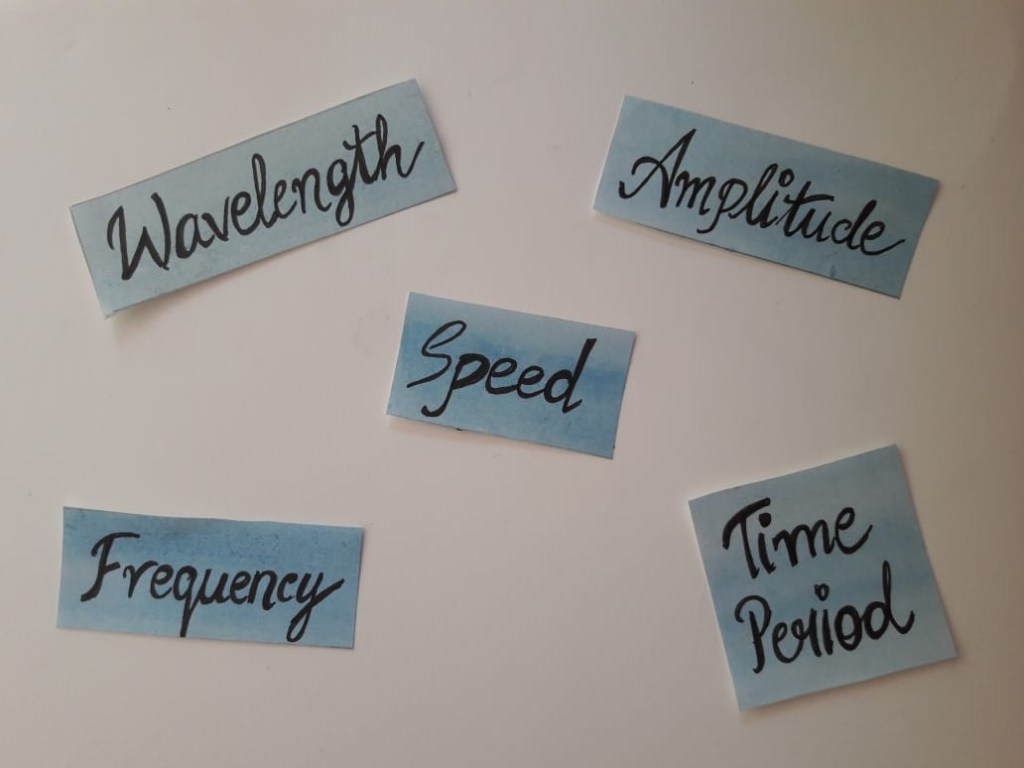
- Wavelength
- Amplitude
- Frequency
- Time period
- Speed
Wavelength
Wavelength is defined as the length between two consecutive crest or trough of a sound wave.It is also the distance between the centres of two successive compressions or rarefactions of the sound wave.In general, it is the length of a complete wave.
λ=v/F
where F is the frequency of the wave and v is the speed of the wave.It’s SI unit is metre (m).
Amplitude
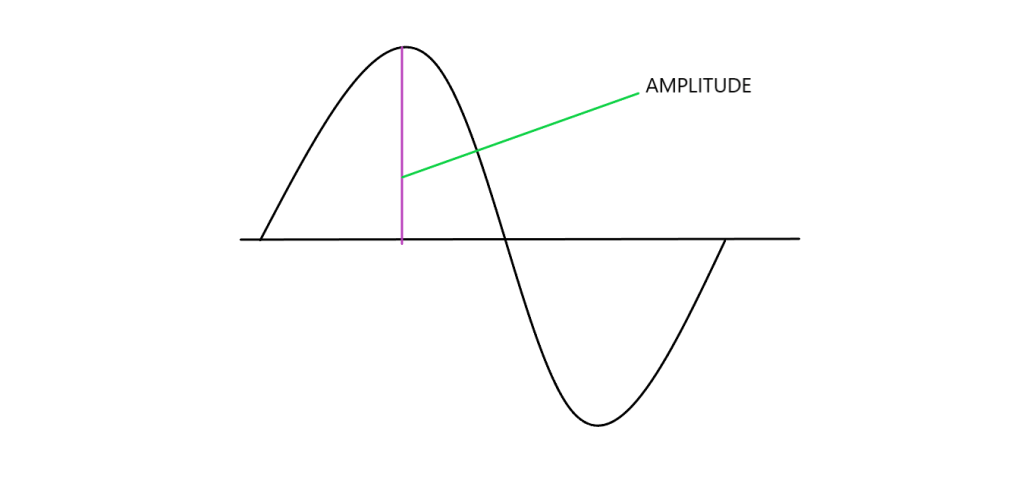
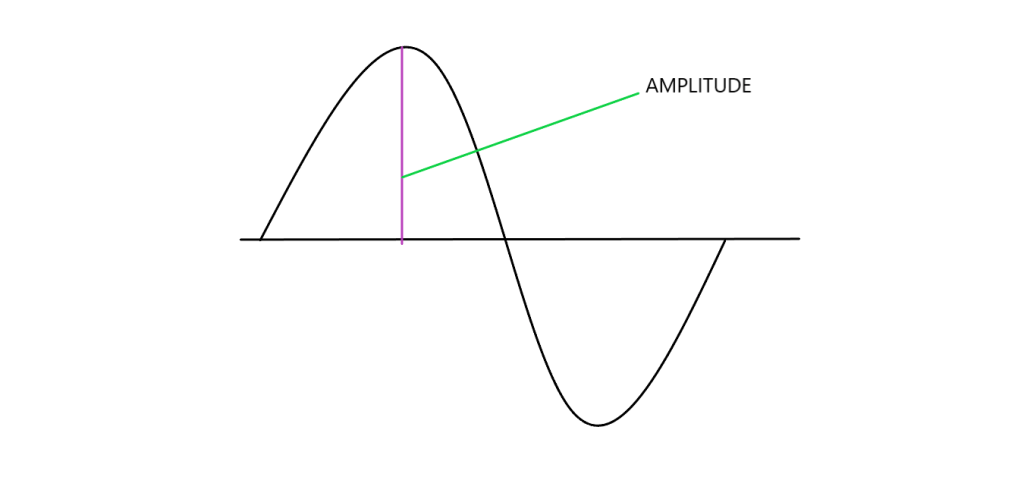
Amplitude is defined as the magnitude of maximum displacement or disturbance in a sound wave.It is a measure of energy.Particles of the medium get displaced temporarily from their original positions when a wave passes through a medium.The maximum displacement of the particles of the medium from their original mean positions when a wave passes through the medium is called as the amplitude.It is also a measure of the energy. Higher the amplitude, higher is the energy .Loudness and softness of sound is determined by the amplitude of the sound wave.
Add title
It’s impossible to imagine a world without sound.
It’s probably the first thing you experience when you wake up in the morning—when you hear birds chirping or your alarm clock bleeping away.
Sound fills our days with excitement and meaning, when people talk to us, when we listen to music, or when we hear interesting programs on the radio and TV.
Sound may be the last thing you hear at night as well when you listen to your heartbeat and drift gradually into the soundless world of sleep. Sound is fascinating—let’s take a closer look at how it works!

Sound is the energy things produce when they vibrate (move back and forth quickly). If you bang a drum, you make the tight skin vibrate at very high speed (it’s so fast that you can’t usually see it), forcing the air all around it to vibrate as well.

As the air moves, it carries energy out from the drum in all directions. Eventually, even the air inside your ears starts vibrating—and that’s when you begin to perceive the vibrating drum as a sound. In short, there are two different aspects to sound: there’s a physical process that produces sound energy to start with and sends it shooting through the air, and there’s a separate psychological process that happens inside our ears and brains, which convert the incoming sound energy into sensations we interpret as noises, speech, and music.
What is a sound wave ?
Sound is a part of our sensory experience. We perceive sound through our ears. Sound is a form of energy. It is a vibration which propagates through a medium.Sound travels in the form of a wave. A sound is produced due to the to and fro motion of the particles of the medium when the sound wave passes through it. A pattern of disturbance which is caused by the energy that travels away from the source of sound is called a sound wave.

A sound wave is a mechanical wave . A mechanical wave is caused by a vibration of matter and it propagates through a material medium like solid,liquid or gas.It involves the interaction between particles.Since a sound wave is a disturbance which travels through a material medium and also involves particle-particle interaction, it is said to be a mechanical wave.Mechanical waves do not travel through vacuum. Hence , sound waves cannot travel in vacuum.

Longitudinal waves are the one in which displacement of the individual particles of a medium is parallel to direction of propagation of wave.In a fluid medium like gas or liquid, the particles of the medium through which sound travels vibrates parallel to the direction that the sound wave moves. Hence, sound waves are longitudinal waves.When particles of the medium vibrate,they move back and forth. This continous back and forth movement of such particles creates high pressure and low pressure regions. These are termed as compressions and rarefactions respectively. Compressions and rarefactions are created due to these longitudinal vibrations.
A wave in which the propagated disturbance is a variation of pressure in a medium is called a pressure wave.Sound wave is also called a pressure wave because it consists of a repeating pattern of high-pressure and low-pressure regions moving through a material medium.
Parts of a sound wave
Each wave has a highest point to which the medium rises to and it is termed as crest.It is the point on the wave where the displacement of the medium is maximum.The lowest point to which the medium sinks to is called a trough.It is the point on the wave where the displacement of the medium is the minimum.
Longitudinal waves are the one in which displacement of the individual particles of a medium is parallel to direction of propagation of wave.In a fluid medium like gas or liquid, the particles of the medium through which sound travels vibrates parallel to the direction that the sound wave moves. Hence, sound waves are longitudinal waves.When particles of the medium vibrate,they move back and forth. This continous back and forth movement of such particles creates high pressure and low pressure regions. These are termed as compressions and rarefactions respectively. Compressions and rarefactions are created due to these longitudinal vibrations.
A wave in which the propagated disturbance is a variation of pressure in a medium is called a pressure wave.Sound wave is also called a pressure wave because it consists of a repeating pattern of high-pressure and low-pressure regions moving through a material medium.
Parts of a sound wave
Each wave has a highest point to which the medium rises to and it is termed as crest.It is the point on the wave where the displacement of the medium is maximum.The lowest point to which the medium sinks to is called a trough.It is the point on the wave where the displacement of the medium is the minimum.
We hear a variety of sounds in our daily life.They can be soft,loud,pleasant and even annoying.Sound produced by a flute is different from the sound of a guitar. We understand from this that the sound produced by different sources have different features or characteristics.There are five main characteristics of a sound wave. They are
- Wavelength
- Amplitude
- Frequency
- Time period
- Speed
Wavelength
Wavelength is defined as the length between two consecutive crest or trough of a sound wave.It is also the distance between the centres of two successive compressions or rarefactions of the sound wave.In general, it is the length of a complete wave.
λ=v/F
where F is the frequency of the wave and v is the speed of the wave.It’s SI unit is metre (m).
Amplitude
Amplitude is defined as the magnitude of maximum displacement or disturbance in a sound wave.It is a measure of energy.Particles of the medium get displaced temporarily from their original positions when a wave passes through a medium.The maximum displacement of the particles of the medium from their original mean positions when a wave passes through the medium is called as the amplitude.It is also a measure of the energy. Higher the amplitude, higher is the energy .Loudness and softness of sound is determined by the amplitude of the sound wave.
Frequency
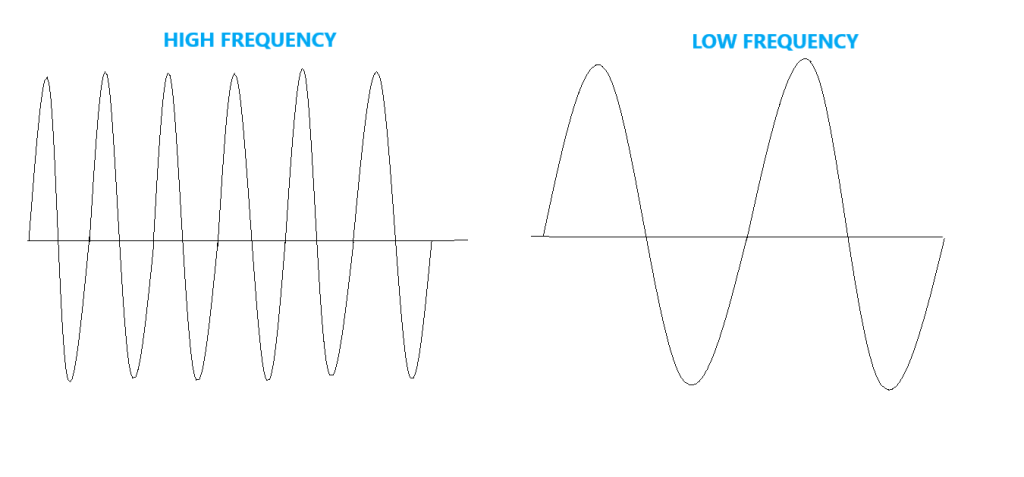
Frequency is defined as the number of complete waves produced in a second.It is also the number of rarefactions or compressions produced per unit time.It can also be defined as the number of vibrations in a second. It’s SI unit is Hertz (hz).Physicists have identified the audio frequency spectrum of the human ear to be between 20 Hz and 20,000 Hz. Under ideal laboratory conditions, the human ear can detect frequencies that are as low as 12 Hz and as high as 20,000 Hz
Time Period
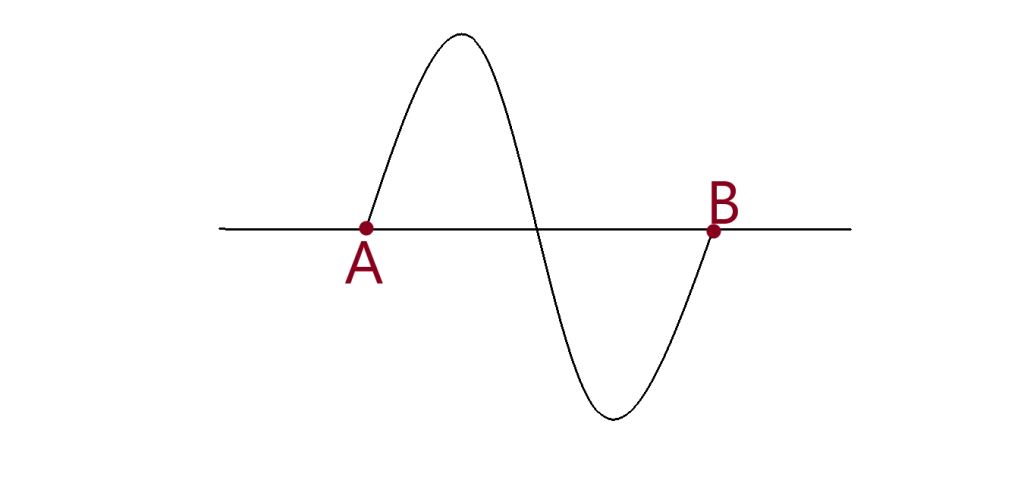
The time taken to produce one complete wave is called as the time period.It is the time taken by a particle in a medium to make one complete vibrational cycle.It’s SI unit is seconds.Time taken to travel from point A to point B is basically called the time period.
Speed
The distance travelled by the wave in one second is called as the speed of the sound wave.It is the speed at which the sound propagates through a medium.It’s SI unit is m/s.The speed of sound is different in different media. The speed of sound is highest in solids because the atoms in solid are highly compressed. The interaction between atoms in a particle is highly dependent on the distance between them. Higher the interaction between the atoms, the quicker the energy is transferred
What is the relation between time-period and frequency of a wave?
The time required to produce one complete wave is called time-period of the wave. Suppose the time-period of a wave is T seconds.
In T seconds number of waves produced = 1
So, in 1 second, number of waves produced will be = 1/T
But the number of waves produced in 1 second is called its frequency.
Therefore, F = 1/Time-period
f = 1/T
where f = frequency of the wave
T = time-period of the wave
Let’s see more about the characteristics of a sound wave in this video

